In May of 2025 I prepared a program of music by the forgotten cornettist and composer Pietro Verdina from a small town near Verona. Verdina was part of a substantial migration in the 17th century of musicians from northern Italy northward across the Alps into the German lands. Verdina was remarkably enmeshed in this network of brilliant musicians, many of whom are much better known today than Pietro. What follows are the program notes I wrote for a performance of his music alongside that of his fellow travelers as part of the Abendmusiken series in the Predigerkirche in Basel, under the direction of Jörg-Andreas Bötticher. The music proved to be excellent and well worth hearing, but what interested me even more than his music was the light his story sheds on this remarkable network of emigrant musicians.
Pietro Verdina (1600 - 1643)
An expatriate cornettist in Habsburg Lands
Pietro Verdina was born in 1600 in the small town of Lonato del Garda on the southwest shore of the Lago di Garda, in between Brescia to the West and Verona to the East. I have been particularly fascinated with the way in which Verdina’s life connected to the lives of a generation of Italian emigrant musicians in the first decades of the 17th centuty. This program attempts to tie them together musically.
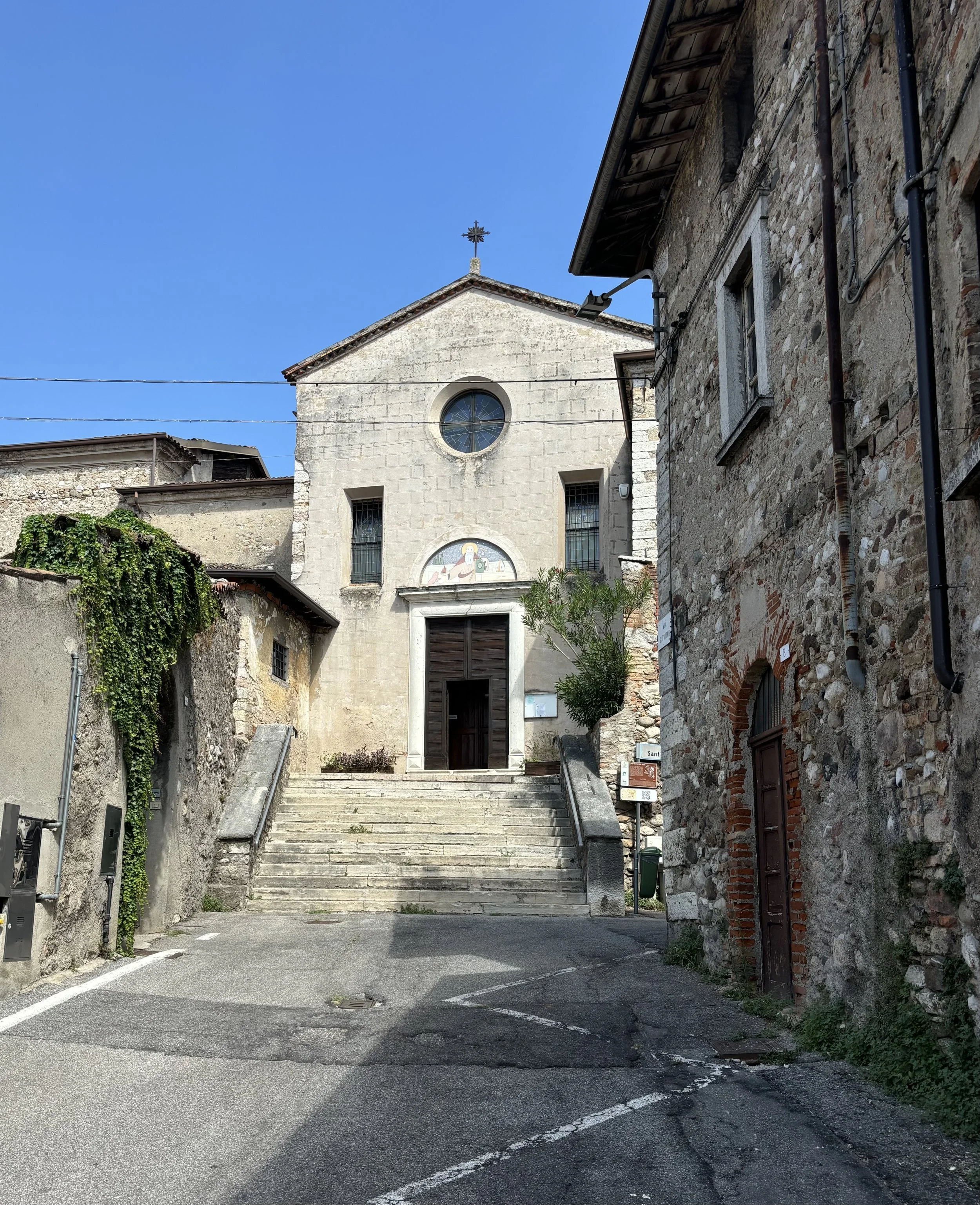
Lonato del Garda
In Lonato, Pietro must have known the young Giovanni Antonio Bertoli, only two years older than him, who served as altar boy and chorister in the parish church. Bertoli eventually became a noted dulcian virtuoso and was the composer of a collection of extravagantly florid sonatas. Evidently Pietro showed some aptitude for music, and since Lonato lay within the civic and ecclesiastical jurisdiction of Verona, he was sent at age twelve to Verona to the prestigious cathedral school, the Scuola degli accoliti attached to the Duomo, a school intended to train singers and instrumentalists, as well as clergy, for service in the Cathedral. The School, founded in the 15th century, had acquired, during Verdina’s childhood, a certain boost in prestige due to the efforts of Stefano Bernardi.
Bernardi had become a singer in the Cathedral of Verona in 1603 and was active from the year before as a salaried musician in the Accademia filarmonica. These three insititutions, the Scuola degli accoliti, the Duomo and the Accademia filarmonica, were all closely inter-connected.
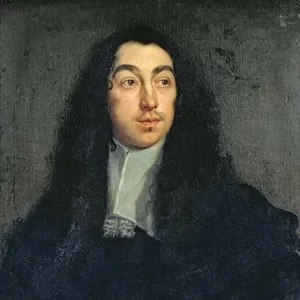
Verdina arrived in Verona in 1612, the year after Bernardi, already an important figure in the Veronese musical world, returned from a four-year sojourn in Rome, immersing himself in the new Roman concertato style. Verdina will have joined a group of students including both Bertoli, the young future bassoonist, and the slightly younger Antonio Bertali, violinist from Verona and student of Francesco Lauro, violinist in the Cathedral Chapel.
Bernardi seems to have become a mentor to Verdina, who made rapid progress as cornettist, so that upon completing his studies in 1616 he was immediately named cornettist both at the Accoliti and at the Accademia Filarmonica. Musical performances at the Filarmonica involved a collaboration of the “accademici” - priviledged and learned dilettanti - with a certain number of professional performers rounding out the ensembles. A document from the archives of the Accademia, speaks of Verdina’s hiring as a salaried musician on December 5, 1616 at a salary of 10 ducats per year.
From the archives of the Curia, payment records show Verdina’s service as cornettist at the Cathedral from 1617 until 1620, and also, in 1615/16. for Bertoli as well, also as cornettist, an instrument he played alongside the fagotto. It is not hard to imagine that the two young cornettists from Lonato might have played together on occasion. A number of sonatas by Bernardi, including the one which opens our concert, feature two or three hghy ornamented upper parts for cornetti and violins. In this period there was a chronic scarcity of soprano voices at the Cathedral, but nearly always at least one cornetto, one violin, and trombone or fagotto. Though Antonio Bertali also played violin in the Cathedral, he was too young to have played with Verdina, as he was not hired until 1624. The final payment to Verdina in 1620, has the note: “Pietro Verdina da Lonà played the Cornetto in the duomo and was an Accolito …, he then left for Germany [parti per germania].” “Germania”, of courrse, just stands for German-speaking lands north of the Alps.
At the time of Verdina’s emigration, there was a well-established connection between the Veronese musical world, especially that surrounding the Duomo and the Habsburg courts. This can be seen in dedications of printed collections, in the career paths of older musicians and in a fluorishing exchange of musicians in both directions. Perhaps Pietro carried introductions by Bernardi to these exalted courts and chapels, but it must have required courage and a good deal of self confidence for him to embark on the journey northward.
It is not known exactly where Verdina went first. We can speculate that he might very well have passed through Bressanone (Brixen in German), a town directly on the route northward from Verona. In Bressanone, the House of Habsburg was represented at this time (1590-1624) by Archduke Charles of Austria, prince-bishop of Breslau, and Bressanone, and brother of Ferdinand, the future Emperor Ferdinand II. Verdina’s mentor Bernardi would be in the service of Archduke Charles beginning in 1622 and soon become head of the large musical chapel, and Verdina’s friend and classmate Bertoli was also in service there around this time according to one of his prefaces. Though Verdina’s presence also seems likely it remains speculative. In any event, two years later Pietro is found in the service of Prince-Archbishop Paris Lodron in Salzburg. Bernardi becomes Maestro di Cappella in Salzburg Cathedral in 1627 under Lodron, who was undertaking a massive reconstruction of cultural life according to Italian styles. So the three Verona Cathedral colleagues - Bernardi, Verdina and Bertoli - were following roughly parallel routes north.
Antonio Bertali
We find Verdina, with more certainty as an instrumentalist in the Imperial chapel in Vienna in 1627. There he would have met once again Antonio Bertali, who must have been a boyhood friend, and who found employment at court in about 1624. In Vienna, Verdina would soon meet an eminent Venetian cornettist, who would become a close and esteemed colleague, Giovanni Sansoni. It seems that Sansoni, with his Venetian pedrigree from the storied school of Giovanni Gabrieli, had an easier path to renown and wealth. He arrived at least by 1619 and perhaps as early as 1614 in Graz, at the court of Archduke Ferdinand, the future Emperor Ferdinand II. There are contradictory reports regarding Sansoni’s movements between Venice and Graz in these years. Ferdinand’s excellent musical chapel had as Hofkapellmeister, Giovanni Priuli, whom Sansoni must have known in Venice. Sansoni is described by Bertoli as “nel Faggotto & nel Cornetto eccellentissimo” (interestingly, the same two instruments played by Bertoli), who goes on to rank his standing as equal to Francesco Turini on organ and Antonio Bertali on violin. In 1619 Ferdinand became Emperor Ferdinand II and moved the entire court from Graz to Vienna but not before Sansoni married a chambermaid of the royal children and was given a large extra payment. At the Imperial court he soon gained considerable renown as a teacher both of cornettists and of Singknaben, and was ennobled in 1623. A court payment record in 1637 lists his salary at nearly three times that of the next highest paid instrumentalist, Antonio Bertali. As we will see, Verdina and Sansoni seem to have become good friends as well as colleagues. In 1633 Sansoni served as best man for Verdina’s wedding. Though Sansoni was also active as a composer, his only surviving works are two polyphonic works vocal works, and two duets contained in the Parnassus musicus Ferdinandaeus of 1615, including the poignant Ego dormio on today’s program.
Alessandro Orologio
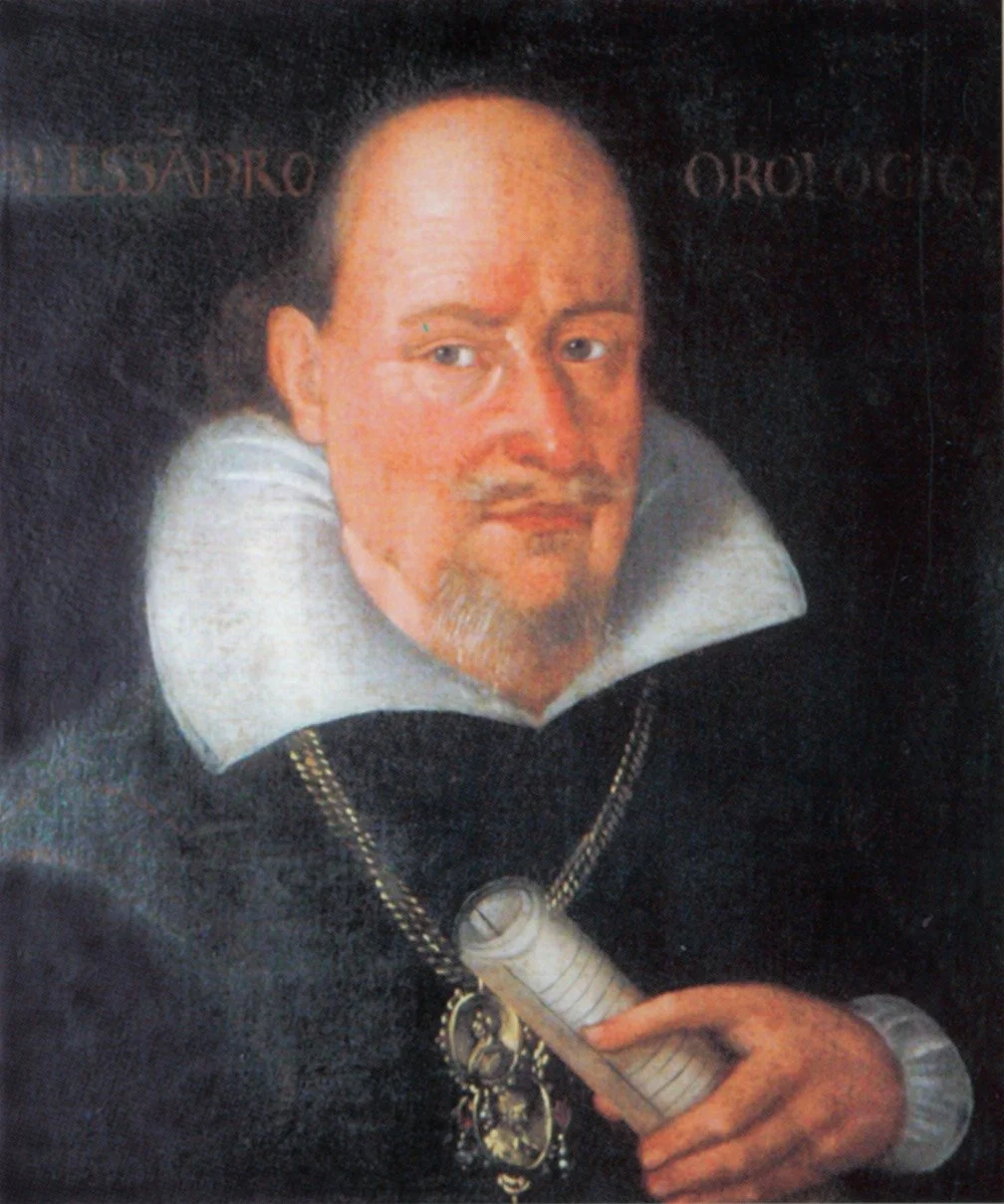
In order to appreciate Verdina’s connection to his community of expatriate cornettists, we should introduce another Venetian musician 50 years older than Verdina and Sansoni, Alessandro Orologio. Born near Pordenone, Orologio passed a hugely perapetetic lifetime as cornettist and composer, travelling from Prague, to Dresden, Poland, Kassel, Wolfenbüttel, back to Prague as vice Maestro di Capella to Emperor Matthias and finally Vienna. In 1633 at well over 80 years of age, he made his last will and testament in Vienna, naming Verdina and Sansoni his sole heirs. The much younger Verdina must have made a remarkable impression on the old cornettist of Pordenone.
Since 1631 Verdina had been the chapelmaster of the small musical chapel of the future emperor Ferdinand III. In 1637, Ferdinand III became emperor, turning down Verdina’s seemingly audacious request to make him Maestro di Cappella, a position held since 1626 by Giovanni Valentini, and also refused Verdina’s request to create a position of Maestro de concerti for him to lead the instrumental ensemble. Instead the Emperor showered the cornettist with praise for his valuable service and gave him a raise. There is ample evidence in exchanges of letters of the high esteem in which Verdina was held by both Ferdinand II and III. He can probably be identified as the “giovine organista Veronese” mentioned in one of these letters, suggesting that his duties as well as his skills were wide ranging.
Archduke Leopold Wilhelm
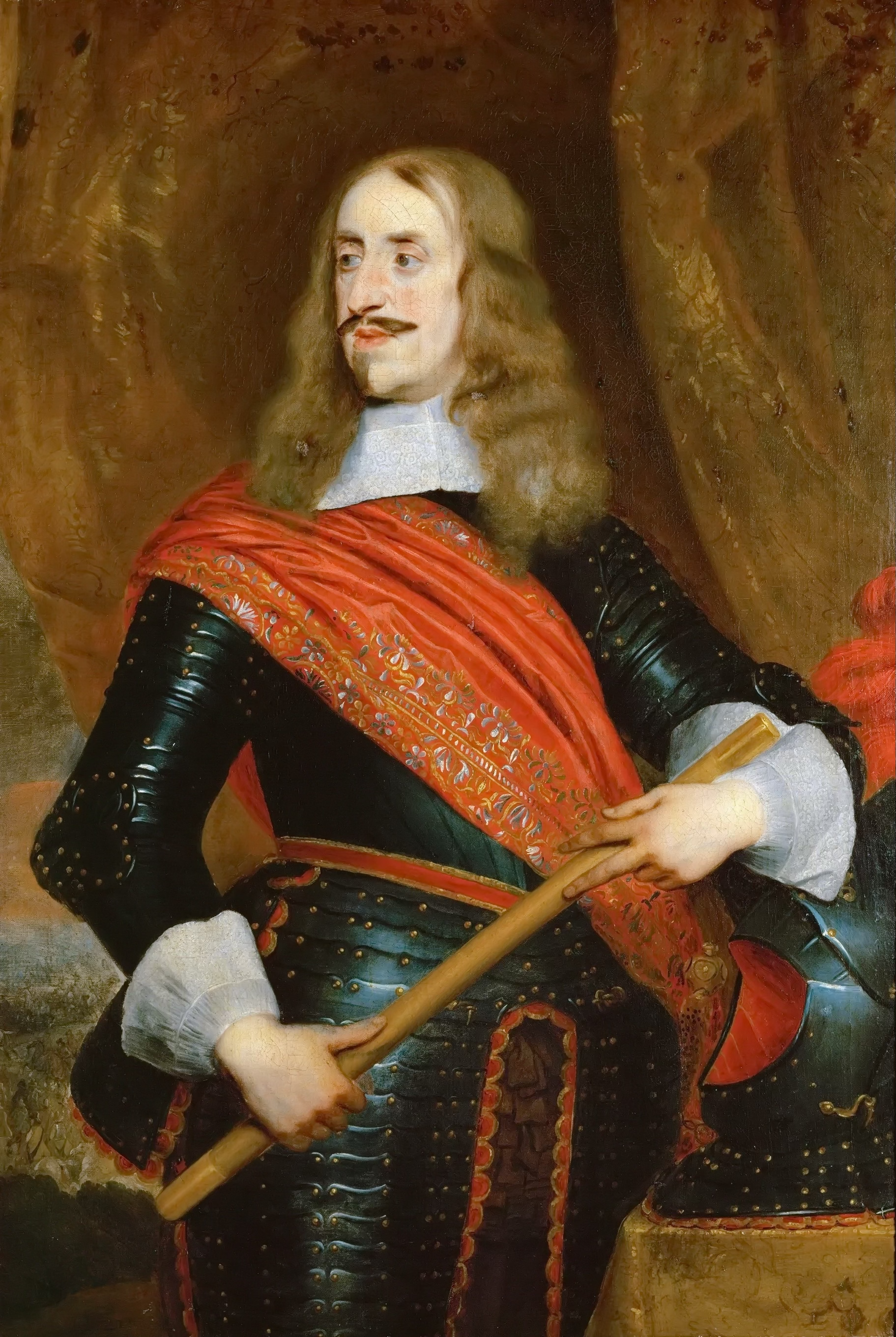
There is no doubt that the Thirty Years’ War will have had an impact on Verdina’s years in Vienna, but it was soon to come home to him in a much more concrete and tragic way. In 1642 the Emperor sent the Imperial troups into action against the Swedes at the 2nd battle of Breitenfeld, near Leipzig. Commanding the troups was his younger brother Archduke Leopold Wilhelm, more interested in art than in warfare, and assigned mainly out of a lack of reliable subordinates. After a disastrous defeat at Breitenfeld, he resigned. He had requested though, the loan of Verdina and some other musicians to accompany him on the campaign. Verdina was taken prisoner. Released after a year of imprisonment, he died sometime in 1643 at an unknown place in Germany
After Verdina’s death the Emperor communicated to his brother the disapproval of his Maestro di Cappella Giovanni Valentini for having exposed his musicians to the ravages of war, mourning the fate of Verdina’s wife, Margherita and his children. In a letter in July he repeated his displeasure at the loss of “so good a servant”.
This narrative about Pietro Verdina, though, does not quite end with the cornettist’s death in Germany. In the year before he was born in Lonato, another composer, Stefano Pasino was born in Brescia, nephew to the composer Giovanni Ghizzolo. Pasino led a long and turbulent life which included a period, as reported in one of his prefaces in 1649, as “organista della magnifica comunità di Lonato”. Pasino returned in his old age to Lonato where he claimed to have finally found peace and serenity. At age 80, nearly four decades after Verdina’s death, he published a collection of sonatas with a preface full of praise for his much younger colleague, Verdina, as well as for Bertoli, the two local instrumental stars of half a century earlier, and included a sonata entitled La Verdina.
In the preface his says,
“Let it suffice to recall Verdina, who raised his Music in the most exalted Courts of Europe
to the point of being caressed by Princes, courted and revered by Knights.
And suffice it to mention Bertola, whose praise still resounds in our times
and to whose name the very same instruments with which he caused to resound
the sacred chapels of Lombardy serve as trumpets.
Whoever is born in Lonato is born to Music, either to practise it or to protect it.”
* * *
Pasino’s sonatas from 1679 are written in a typical style for violin music of the 1670s, and even include one in imitation of the cries of “diversi animali brutti”. The violin writing is neither unplayable on cornetto nor particularly comfortable including the Sonata La Verdina. There is, however, one sonata detta la Savolda for two cornetti or violins, tenor and bass trombones. This sonata, written in an entirely different style, more typical of the early 17th century, causes me to speculate that Pasino was thinking of the two cornettists from Lonata, Verdina and Bertoli.
Making a quick inventory of the surviving music of Verdina we see that it is distributed between three libraries: Kromeriz, Kremsmünster, and Lüneburg. It all survives in manuscript copies, many of them seemingly written in haste, certainly not prepared for publication. The most striking aspect for me is the scarcity of parts for cornetti, really only two Masses. Of course, Verdina’s career was quite short, 22 years in all, but for the first 10 years, until 1631, we do not know what duties he had in Bressanone, Graz and Vienna. He probably will not have had large forces available until 1637 when Ferdinand became Emperor Ferdinand III. From then until his capture was only 5 years.
Of the manuscripts preserved in Kromeriz. Most interesting are the Missa Sancti Georgii for 4 voices concertati and ripieni, 2 violins or cornetti and 3 trombones. The Missa Sancti Georgii uses the wind ensemble (2 cornetti and 3 trombones) in brief sinfonie, as obbligati (usually with 2 cornetti accompanying a bass voice) and as instrumental colla parte support, often with 3 trombones doubling the 3 bottom voices.
Verdina’s contrapuntal writing seems to be his greatest strength and was almost certainly a result of his thorough training at the Accoliti, which emphasized traditional counterpoint. But he also infused his thematic material with many concertato characteristics, ornamental figures and rhetorical devices.
Of interest as well are a number of Vespers Psalms including a group of 5 voice settings in which each motet has a different voice or pair of voices acting as soloist with the rest of the singers forming a ripieno.
The works in Kremsmünster are larger in scale, both for their instrumentations and their lengths. These works probably resulted from Verdina’s last five years at the court of Ferdinand III.
There are also interesting works in Lüneburg, including a Missa purificationis a 28 with 6 singers concertato and ripieni, 6 instruments, and organ. the music of this Mass is quite interesing, though, alas, has no wind instruments specified.